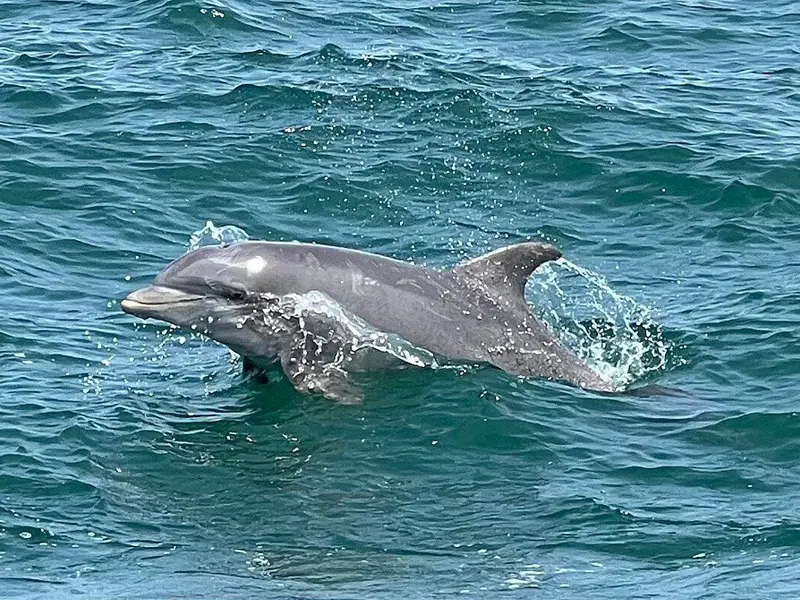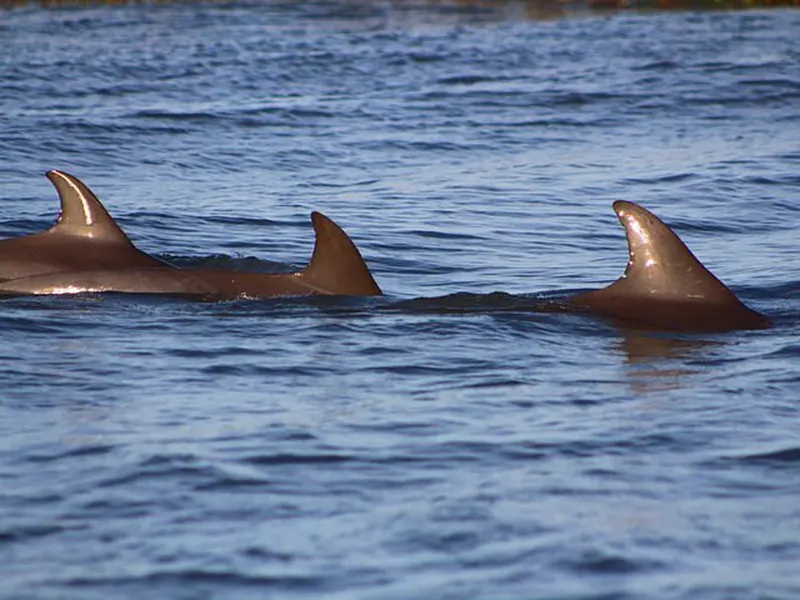
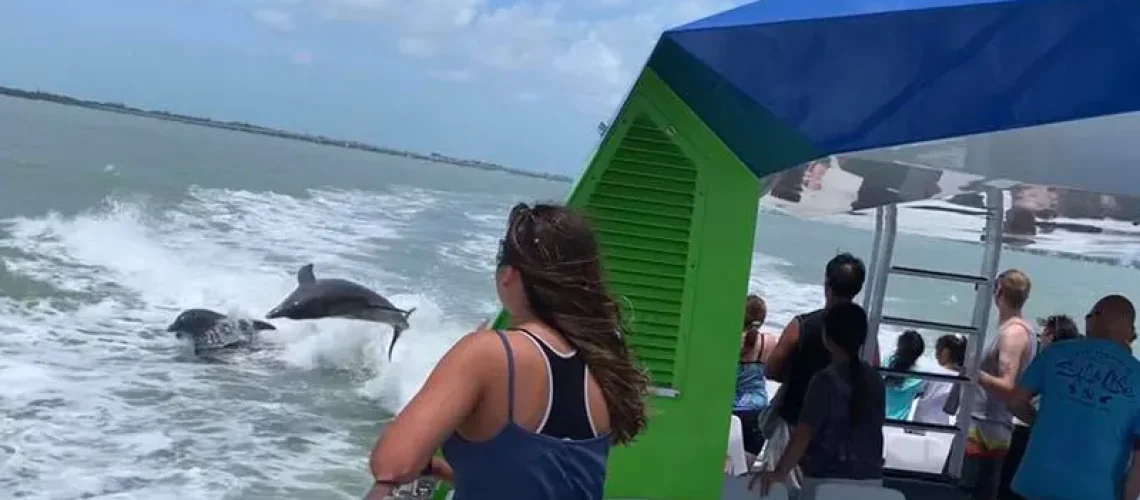
Dolphins follow boats mainly to ride the wake, conserve energy, play, and explore their environment. The waves created by boats allow dolphins to glide effortlessly, while their natural curiosity and intelligence draw them toward movement, sound, and potential food sources.
But Why Do Dolphins Really Follow Boats?
If you’ve ever been on a dolphin tour in Myrtle Beach, you’ve likely seen dolphins swimming right next to the boat—or even racing ahead of it. This behavior is common, natural, and actually a mix of science, instinct, and play. Here are the top 6 reasons why:
- To ride the wake and save energy
- Because they are curious and intelligent
- For play and entertainment
- To find food more easily
- As part of social pod behavior
- Due to sound and echolocation stimulation
1. Riding the Wake
Dolphins ride boat wakes because it helps them move faster while using less energy. The pressure waves created by boats act like moving ramps, allowing dolphins to glide effortlessly through the water.
This is the #1 reason you’ll see dolphins:
- Surfing behind boats
- Gliding without splashing
- Keeping pace with fast vessels
2. Natural Curiosity
Dolphins follow boats because they are highly curious animals. They investigate movement, sound, and new objects in their environment, including boats and humans.
Dolphins may approach boats to:
- Explore unusual motion
- Observe people
- Interact with water patterns
3. Play Behavior
Dolphins often follow boats simply because it’s fun. They are playful animals that enjoy jumping waves, racing alongside boats, and interacting with their surroundings.
Signs of play:
- Repeated jumping
- Spinning and splashing
- Young dolphins mimicking others
4. Hunting Opportunities
Dolphins sometimes follow boats because fish gather near them. Boats can stir up fish or attract bait, making it easier for dolphins to hunt.
However:
- Ethical tours do NOT feed dolphins
- The behavior remains natural
5. Social Pod Activity
Dolphins follow boats as a group because they are social animals. When one dolphin approaches, others often join, turning it into a shared activity.
This leads to:
- Multiple dolphins in the wake
- Coordinated swimming
- Group interaction
6. Sound and Echolocation
Dolphins are attracted to boat sounds and vibrations. These signals stimulate their echolocation system and encourage exploration.
Boats produce:
- Low-frequency vibrations
- Water displacement signals
- Acoustic cues dolphins can detect
See Dolphins Follow Boats in Real Life
Watching dolphins ride a boat wake in person is fast, exciting, and completely different from videos or photos.
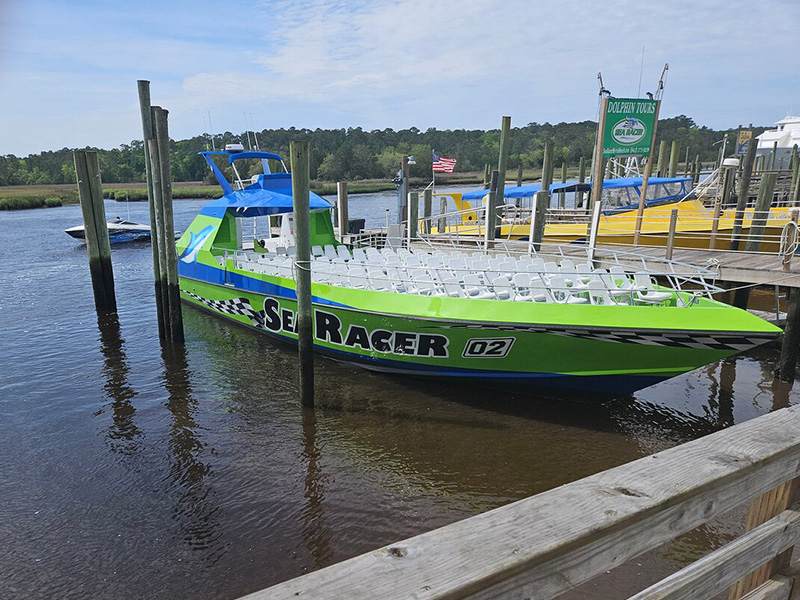
On a Sea Racer tour, you may see:
- Dolphins surfing waves
- Pods swimming alongside the boat
- Playful jumps and spins
Book your Myrtle Beach dolphin tour today and experience it firsthand.